
OFÈLIA//OPHELIA//OFELIA
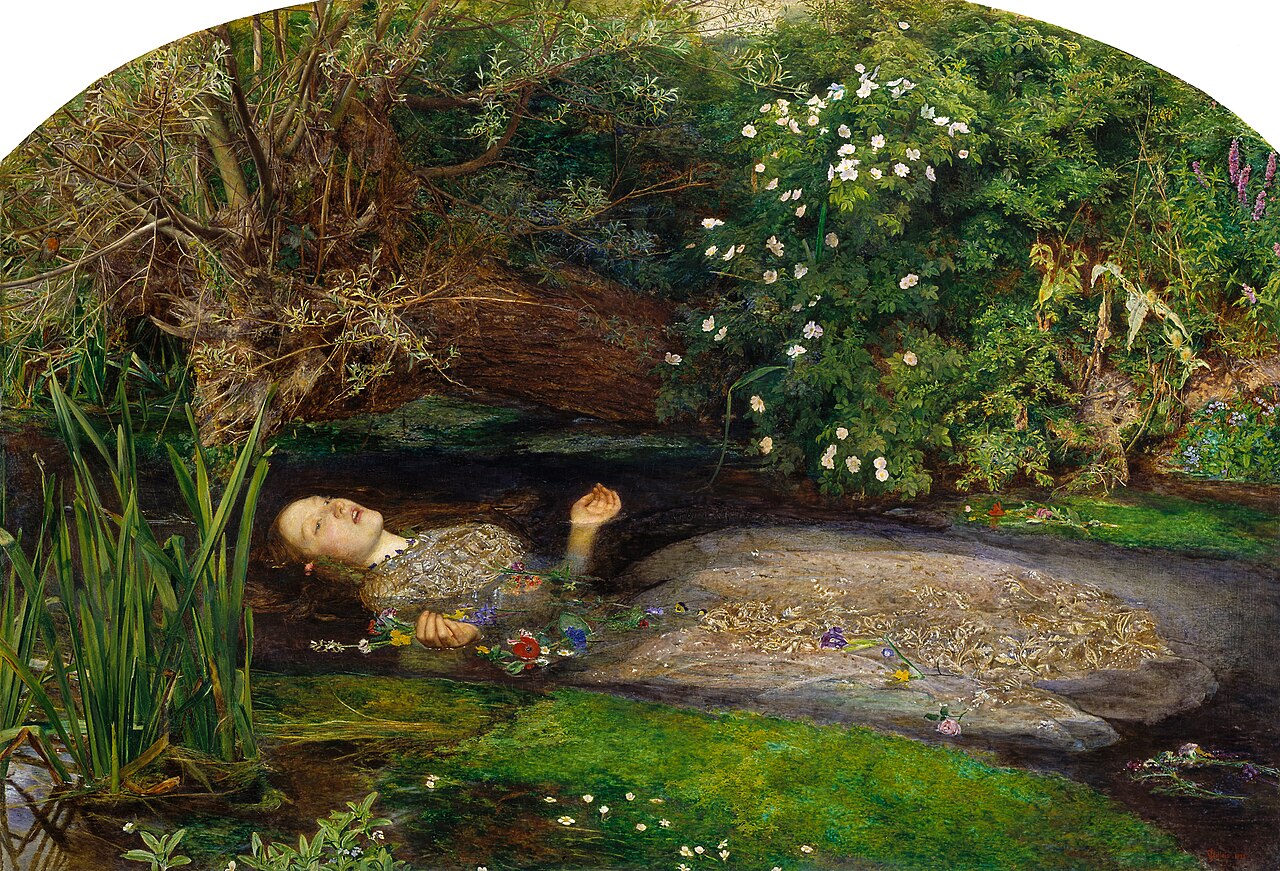
La pintura il·lustra una escena de la tragèdia Hamlet de William Shakespeare. Representa el moment en què Ofèlia, després d’embogir per la mort del seu pare a mans del seu estimat Hamlet, cau accidentalment a un riu mentre recull flors i mor ofegada cantant suaument.
Sempre m’ha commogut l’escena d’Ofèlia en aquell rierol on sembla impossible ofegar-se sense voler que passi expressament. Per això, sempre he tingut la sensació que la història de l’art passa gairebé sense tocar el tema ardu del suïcidi. Però em sembla que és això mateix.
En aquesta matèria hi ha la controvèrsia «és més valent o més covard qui se suïcida o qui ho afronta tot?» Potser passi pel cap de qui decideix anar-se’n per voluntat pròpia d’aquest món, que podrà veure per un “foradet” a aquells que deixa amb el patiment de la seva acció; però, no és així, qui se’n va, se’n va i entra en una altra història, sense comptar que l’acte de matar-se té conseqüències.., comporta un mal karma que haurà de saldar en el seu naixement següent.., perquè, seguirà en aquest món, no se n’anirà al descans. Com tothom.
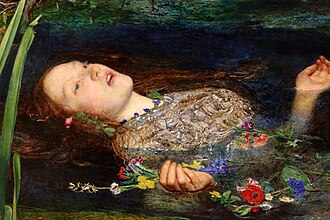
The painting illustrates a scene from William Shakespeare’s tragedy Hamlet. It depicts the moment when Ophelia, driven mad by the death of her father at the hands of her beloved Hamlet, accidentally falls into a river while picking flowers and drowns, softly singing.
I have always been moved by the scene of Ophelia in that stream where it seems impossible to drown without intentionally causing it. Because of this, I have always felt that the history of art glosses over the difficult subject of suicide, barely touching upon it. But I think that’s precisely the point.
In this matter, there is the controversy: “Is it braver or more cowardly to commit suicide or to face everything?” Perhaps it crosses the mind of someone who decides to leave this world of their own free will that they might see, through a “peephole,” those they leave behind suffering because of their actions; But it’s not like that, whoever leaves, leaves and enters another story, not to mention that the act of killing oneself has consequences… it brings with it bad karma that must be settled in one’s next birth… because, one will continue in this world, one will not go to rest. Like everybody.
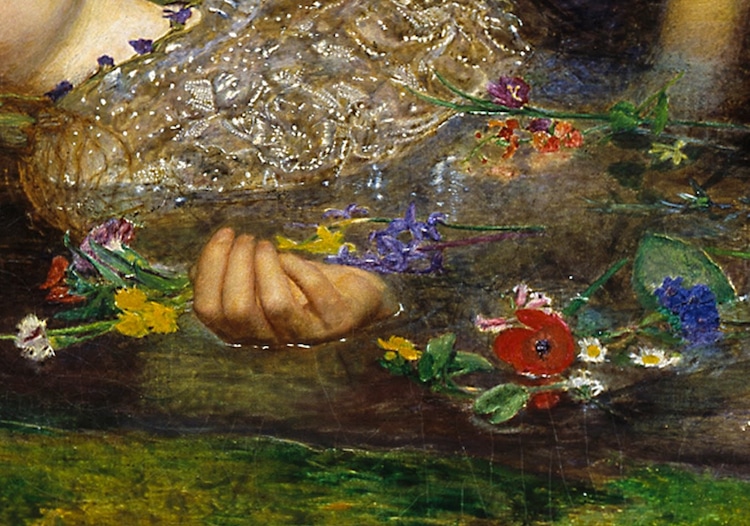
La pintura ilustra una escena de la tragedia Hamlet de William Shakespeare. Representa el momento en que Ofelia, tras enloquecer por la muerte de su padre a manos de su amado Hamlet, cae accidentalmente a un río mientras recoge flores y muere ahogada cantando suavemente.
Siempre me ha conmovido la escena de Ofelia en ese riachuelo en donde parece impossible ahogarse sin querer que ocurra adrede. Por ello, siempre he tenido la sensación que la historia del arte pasa rozando casi sin tocar el tema arduo del suicidio. Pero creo que es eso mismo.
En esa materia hay la controversia «¿és más valiente o más cobarde quien se suicida o quien lo afronta todo?» Quizá pase por la cabeza de quien decide irse por voluntad propia de este mundo, que podrá ver por un «agujerito» a aquellos que deja con el sufrimiento de su acción; però, no es así, quien se va, se va i entra en otra historia, sin contar que el acto de matarse tiene consecuencias.., trae consigo un mal karma que deberá saldar en su siguiente nacimiento.., porque, va a seguir en este mundo, no se va a ir al descanso. Como todo el mundo.

